
Skip to content Skip to footer
APS MCC EASA


APS MCC

Airline Pilot Standard Multi-Crew Cooperation
the first and only EASA approved training in Portugal!

APS MCC EASA

The easiest and smoothest transition into your future as a commercial pilot

A320 or B737

The Airline Pilot Standards Multi-Crew Cooperation Course  

APS MCC is a course that teaches pilots how to interact and divide flight tasks between the elements of a crew, following the methodologies used in airlines and fly aircraft using simulators representing the entire aircraft. It is an EASA-recognized course intended for a recent ATPL or CPL/MEIR holder and prepares them to do any type rating course. 
What is APS MCC?

About the course

Standard MCC

– Standard MCC

– Communication

– Leadership & Teamwork

– Situational Awareness

– Workload Management

– Problem Solving & Decision Making

APS MCC

– Standard MCC

– Communication

– Leadership & Teamwork

– Situational Awareness

– Workload Management

– Problem Solving & Decision Making

– Monitoring & Crosschecking

– Task Sharing

– Use of Checklist

– Systems: normal/abnormal emergency operations

– Advanced swept-wing flying training

– Airline operation scenario training

Key componente of APS MCC Course

86 H – THEORETICAL INSTRUCTION

40h – A320 or B737 MAX Systems CBT (including Progress Tests and Exam)

25h – MCC modules (Human Factors | Error, performance and safety | Cockpit Resource Management)

14h –  Advanced swept-wing jet aeroplane training

07h – Airline operations scenario training

42H – SIMULATOR SESSIONS (FNPT-II)

20h – MCC Training

12h – Advanced Swept-wing jet aeroplane training

08h – Advanced airline operations scenario training

02h – Final Assessment

Requirements

18 years old minimum

At least 70H as PIC

Valid ME IR(A)

Minimum level 4 of ICAO English

Location

A320 – Lisbon

B737 MAX – Viseu

Career path and opportunites

Airlines are already asking for the APS MCC in their Non-Type Rated First Officer job openings.

PREFERRED QUALIFICATION The APS MCC ensures that a pilot is already familiar with the multi-crew operations, enhancing the success rate of approval on the following Type Rating.

COMPETITIVE EDGE Pilots with APS MCC training are viewed as more prepared and competent, giving them a competitive edge in the job market.

What to expect from this important qualification?

For current integrated or modular ATPL pilot students, the APS MCC is considered a very advanced MCC module to be taken during the final phase of the course, with all the usual task-sharing and checklist procedures performed in an A320 environment. The standard MCC module is not sufficient to prepare a pilot for a technical job interview at an airline because it lacks experience and simulator hours in a modern aircraft.

Integrated into the final phase of ATPL training, the APS MCC allows students to contextualize the knowledge acquired throughout the course in a modern operational environment. Exposure to Airbus or Boeing procedures, SOPs, and operating philosophy contributes to a deeper understanding of the practices used by airlines, enriching their training before obtaining professional licenses.

Graduated ATPL pilots can benefit from this course by experiencing an introduction to a Type Rating, studying all the SOPs (Standard Operating Procedures) for the A320, for example.

This course aims to enhance pilots' preparedness for recruitment processes and facilitate the transition to airline operations, in accordance with EASA requirements and recommendations.

Differences between standard MCC and APS MCC at IFA

STANDARD MCC

25 Hours Ground School
15 Hours Simulator FNPT-II ALSIM
APS MCC A320
86 Hours Ground School + 42 Hours Simulator FNPT-II A320 or B737 MAX

Skill Set to be acquired

- MCC Standard
- Communication
- Leadership and Teamwork
- Situational Awareness
- Workload Management
- Problem Solving and Decision Making

- MCC
- Communication
- Leadership and Teamwork
- Situational Awareness
- Workload Management
- Problem Solving and Decision Making
- Monitoring and Cross-Verification
- Task Sharing
- Checklist Use
- Systems: Normal/Abnormal Emergency Operations
- Advanced Swept Wing Flight Training
- Air Operation Scenario Training

icon simulador - APS MCC - Airline Pilot Standard Multi Crew cooperation

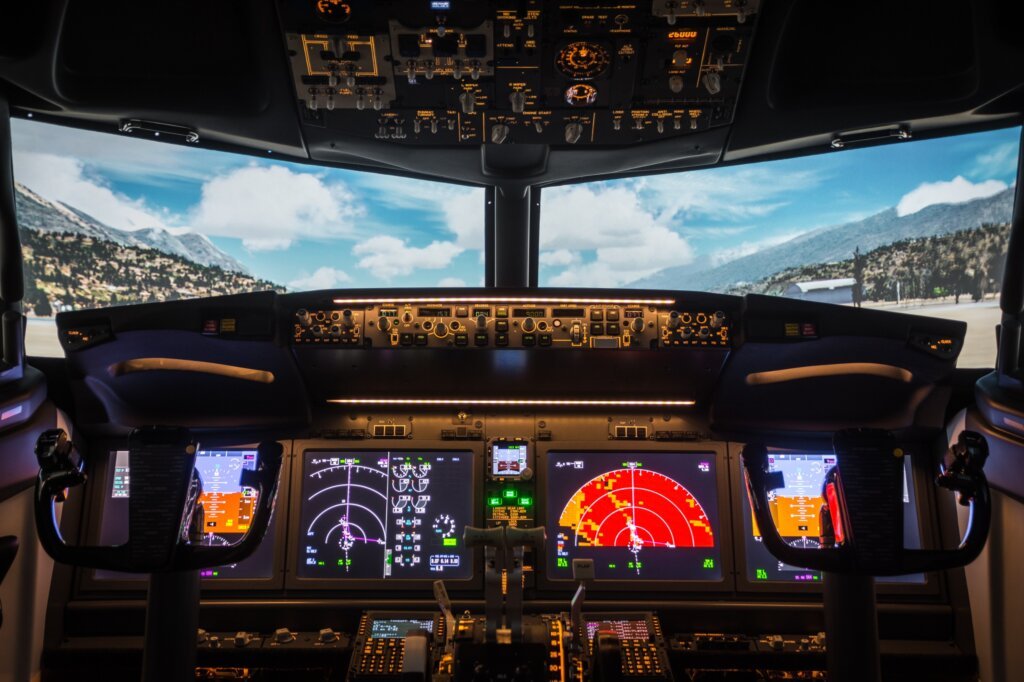
Simulators are an exact replica of the aircraft Airbus A320 and Boeing 737 MAX

ecra simulador - APS MCC - Airline Pilot Standard Multi Crew cooperation

There is a complete package allowing all normal, abnormal and emergency procedures to be executed as they would on the A320 or B737 aircraft

icon comando - APS MCC - Airline Pilot Standard Multi Crew cooperation

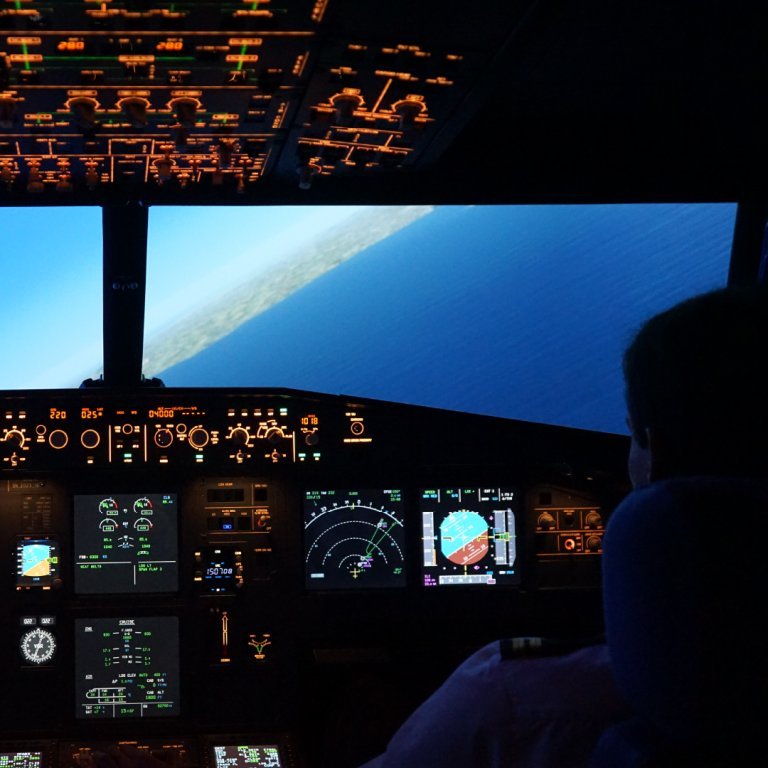
With its 200º field of view, high-resolution images and fast visual display, the simulation environment is as close as possible to flying the real aircraft

APS MCC Training (A320 or B737)

More than a training requirement, the APS MCC is a bridge between pilot training and the reality of airlines. Through operational scenarios inspired by real flights, trainees develop essential teamwork, operational management, and cockpit discipline skills, training in an Airbus A320 or Boeing 737 environment for preparation closer to the demands of the job market.

During the course, pilots also become familiar with the Standard Operating Procedures (SOPs) used in the operation of Airbus and Boeing aircraft, gaining a practical understanding of the workflows and methods adopted by modern airlines.

B737 MAX simulator for pilot training

APS MCC B737

Conducted in a simulator based on the Boeing 737, the course develops essential skills in cockpit cooperation, flight management, and decision-making in a multi-crew environment. The training replicates real-world operational scenarios, allowing pilots to gain practical experience aligned with the standards of modern airlines.

details simulator A320 - APS MCC - Airline Pilot Standard Multi Crew cooperation

APS MCC A320

Conducted in a simulator based on the Airbus A320, this course provides an experience close to the operational reality of an airline, focusing on automation, systems management, normal operations and abnormal situations, preparing pilots for selection processes and future type ratings.

Additional Information

Use the form below to request additional information: